Automatisch erstellt und nicht Wort für Wort korrigiert. Ein Klick auf eine Zeitmarke springt an die Stelle in der Folge.
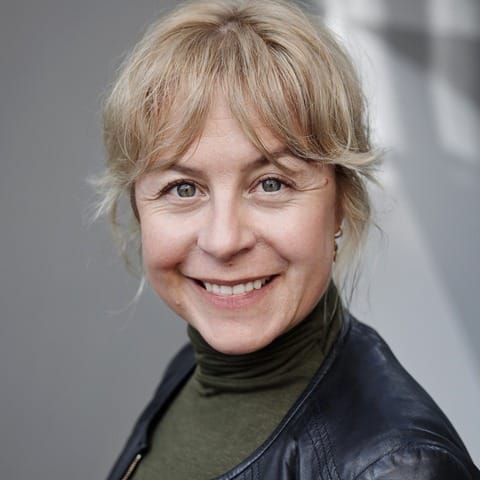
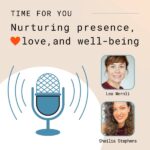
0:02Shailia StephensSo, hi everyone and welcome back to a new episode of Time 4 U. Um, I'm Shelia and I'm here with my beautiful friend Leah Van Lee. Hi Leah!
0:12Lea WernliHey guys!
0:14Shailia StephensGuys, we are so both tired today. It's a Friday, it's the afternoon. Probably the best thing for us to do would be go right into the weekend.
0:23Lea WernliYes.
0:24Shailia StephensBut, um, we thought No, we, we're gonna try to do this, uh, today. And because we always preach, it doesn't matter, um, where you are, how you feel, um, something is always coming through you, something good. So, Leah, like, knock on wood, today's the day that we're gonna get to this. And, um, Leah's looking like a Barbie today, by the way. If you're listening to the episode, she's got on a red hat, but it looks pink in, in the, um— On the screen. And, um, we've been talking, we've been talking for already an hour, Leah. Did you know that? Before we even got started. And I keep looking at her like she's a Barbie doll. So I like your hat, Leah. You're looking cute today.
1:06Lea WernliThank you. And normally we would have recorded like the hour before, but today, as sometimes is the case, it was very private. And we would love to share everything with you guys, but We can't. And that's okay too. We don't have to and you don't have to. It's okay to have private stuff and things you don't want to share publicly.
1:32Shailia StephensYeah, absolutely. All the good stuff behind the walls.
1:36Lea WernliI mean, we are quite open, but—
1:40Shailia StephensBut not completely.
1:42Lea WernliNo, there are people involved, so we can't. Yeah.
1:46Shailia StephensSo we were just brainstorming a little bit before we jumped onto the recording, and Leah gave me a lot of topics that she's been seeing bits and pieces and little nuggets here and there. And one of the things that stood out to me was she was talking about being contributory. Leah, that word is going to kill you for the rest of this episode, I can guarantee you.
2:11Lea WernliMm-hmm.
2:11Shailia StephensLet me help you. Contributory. You want to say it?
2:15Lea WernliContributory. Contributory. I have an H, maybe, just for now.
2:21Shailia StephensI may have made that word up. I don't even know if it's a thing, but it made me curious, and something in it felt juicy and also relaxing when you were talking about it, Leah. So I thought if you wanted to, You could start there.
2:40Lea WernliYeah. So I actually heard it somewhere and I was just thinking, who was it? And I think it was Denise Daffodil, Thomas, Thomas Daffodil, something like that. She's a money mindset coach and, and she has a fun podcast. It's, I think, Chill and Prosper or something like that. And I loved it. And you know what was really interesting? When I started listening to her, she mentioned 2 quotes out of a hidden 3P book.
3:18Shailia StephensA hidden 3P book?
3:20Lea WernliYeah, a hidden 3P book. And why is it hidden? Because it's not It's from this. Oh, God. Oh, no. I have to— I will find it. It's Don't Sweet the Small Stuff.
3:41Shailia StephensDon't Sweat the Small Stuff.
3:43Lea WernliDon't Sweat from— Sweat— say something. The Small Stuff. Yeah. From it. His name is, um, actually, I'm— guys, I'm tired. I know it's not fun, but Richard Carlson. Yeah.
4:08Shailia StephensFrom Richard Carlson. Okay.
4:10Lea WernliIs a friend or used to be a friend of George Pransky. Yeah. And he had a fallout, I think, with Sydney Banks. I don't know why I know 3 people's names, but I do. So, and actually it's woven into all of his books and all of his things. It's, um, the grounding is, are the 3 principles. Isn't that interesting? Because these books sold millions.
4:44Shailia StephensMhm.
4:45Lea WernliLike till today. So the first thing I heard was a quote, like she quoted Richard Carlson. And then I was really curious. I was like, huh, interesting. She doesn't talk about this, the stuff we do, but somehow it was— there was something. And she mentioned that, like, hey, you don't have to be a guru. You don't have to know it all. You don't have to— know a lot. You can be— you can contribute to the discussion, to a topic, to, um, something, and that's okay.
5:33That's enough. Like, more in the way, I saw something and it helped me. I did it that way. Maybe you want to try it out. How Are you doing it? So, and it was, as you said, when we started, like this freeing. Yeah. Me too. I, I just know little bits and pieces in certain areas that could be helpful for someone.
6:08Shailia StephensYeah.
6:09Lea WernliAnd to be one of thousands or millions of people who point in a direction of, hey, could that be helpful, is easy and freeing and cool. So I, I really felt that deeply somehow.
6:31Shailia StephensYeah, I love that. And I was— I had this interesting experience just last evening. And it may not be at all what you're talking about, but I loved it so much. I met online last night with a person that I met in the 6th grade back in Tennessee.
6:54Lea WernliOoh.
6:55Shailia StephensAnd he's now a farmer in Tennessee. He has a very particular type of crop, and he's really passionate about growing. And he's, I mean, he's incredible. He's got incredibly broad and deep knowledge in that area. And he popped up out of nowhere. And he ended up donating to Naki Valley. He covered a full month of May for the team to eat and have transport and all this stuff, because we had had a conversation. He found out about the work. And then I was like, you know, actually, Phillips, who's managing the team in Naki Valley at the refugee camp, he's into permaculture and organic growing, and he's really been trying to teach the people there how to grow food because one of the biggest problems at the refugee camp is there's just not enough food.
7:56And he's also tried to teach them how to grow poultry or produce poultry and eggs and those type of things. But all of the projects are kind of failing. And he's doing his best, but it's failing. And so I was like, you know, would you be interested in speaking with Phillips? Maybe something you know could be pertinent to what they want to know, kind of a thing. And so we've had 2 calls, and last night was the second call. And I I was loving it, Leah, because I know nothing about agriculture. Like, I literally have 3 plants in my house. They're on the window bank of my kitchen, and if I remember, I might give them some water, you know? Like, I'm not—
8:43Lea WernliOh, yeah.
8:43Shailia StephensI know nothing. I've never grown a vegetable, not a potato, not a tomato, like nothing. I'm— not even herbs do well with me, kind of a situation. And I could be thinking to myself, what am I doing here? I don't belong here in this conversation. But I did not see it that way. I was just like, I kind of love when I'm in an area where I know nothing, where I'm, where I'm not just not a guru or an expert, but where I'm an idiot.
9:16Lea WernliMm-hmm.
9:17Shailia StephensBecause if I'm an idiot in something, I have— I'm fearless. I'm, I don't, I don't think I have to say anything smart. I don't have to contribute something amazing that people are going to see. I just go in and say, I'm an idiot when it comes to gardening, but I'm hearing you talk about this and you talk about that. Does that mean what I think it means?
9:41Lea WernliMm-hmm.
9:42Shailia StephensAnd, and then I ask questions and that is a contribution and it gets people thinking, it gets people talking. Um, and I would, I was starting to put like some things together. Like, huh, I wonder, I wonder if we could do like a mother greenhouse. And, and Cody said to me, oh my gosh, he's like, um, in the world I work in, that, that, um, propagation greenhouse is called, is called the mother greenhouse. He's like, how did you know that? And I'm like, I didn't know that, you know. And I, I said, mm-hmm. I wrote down some words from yesterday, so—
10:21Lea WernliYeah, do that.
10:22Shailia StephensOkay, so, um, hydroponics. Have you ever heard of that, Leo?
10:26Lea WernliNo, never.
10:27Shailia StephensOkay, great. Um, have you ever heard of a garden tower?
10:31Lea WernliNo.
10:33Shailia StephensOkay, I hadn't either. Um, then what else did I have on here? Um, I had cane. Did you know— did you know that you could grow cane and that you could make tools out of it? You can make roofs out of it. You could make fertilizer out of it. Like, it has a million different uses. So anyway, no. Like, nobody needs to know that on the podcast right now. But what I'm trying to point to you is like, when I, if I get into the illusion that I'm an expert on anything, right? Like, I'm an expert in the 3 principles or I'm an expert in the, in the online business space, 'cause I did that for almost 30 years. I feel like that is the most disadvantaged space you could possibly be in.
11:26Lea WernliYes.
11:27Shailia StephensLike, all the curiosity goes out the window. All the beginner's mind goes out the window. Um, all of the non-self-conscious contribution falls out the window. So that's what I heard when you were talking.
11:45Lea WernliYes, exactly.
11:46Shailia StephensSo what are you hearing in that?
11:48Lea WernliI'm, I'm, that's one part of it. And I, I just love it. This, what stood out is also the beginner's mind, the curiosity, the, the being involved, just, just because and not for something. And that's, that's beautiful to find spaces like that and to, to have also the space within to be part of, of things like that. That means that, um, we have enough capacity to, to be childlike.
12:34Shailia StephensYeah.
12:34Lea WernliThat's interesting because when we have to be experts all day long and it's never true. I mean, I had this thought when I was in the bus a couple of days ago. They were all these adults and they looked at us as adults and I just saw we don't have a clue. We all pretend—
12:59Shailia StephensWe have no idea.
13:00Lea WernliThat we have a clue. We wear suits and ties if it's needed. And it's like, me and a guy just in front of me, I could tell that he was thinking, I don't know. And he wanted to, and he was scratching his hair and then he realized it and he didn't do it because He's a middle-aged man. And it's like this whole idea of we have to know and we have to be experts and we have to be knowledgeable. That's very stressful for most of the people. And it's not the way nature or we probably would work.
13:57And I also was thinking about that when I was— I'm in school right now. I'm doing something in a school I've never been, more or less my old profession, and I'm not that good anymore at it. Don't tell anyone. I'm a lot better as a coach nowadays.
14:14Shailia StephensOkay.
14:15Lea WernliSo I used to be a special needs teacher and this teacher and in high schools and whatever, and I ended up for a couple of weeks. I don't actually know how, but I said yes. And, and the kids had to do like their examinations alone and like not knowing and failing. And I, I was thinking that it's just not how it works to find solutions. We need to think together, to collaborate, to contribute, to fail together, to stay curious, to, to be in it together. And then everyone can be able to have a puzzle or a part or something useful for maybe a solution or a next step.
15:13Shailia StephensYeah.
15:14Lea WernliAnd it's so strange to to, to praise the best and to only the best and the higher and the bigger and the gurus and the know-it-alls, because it's somehow against our nature as well.
15:36Shailia StephensMm-hmm.
15:37Lea WernliAnd yeah, yeah, so To come back to, hmm, what can I offer today as a possibility or something or maybe nothing? And not to wait till we think we know or till we think we are better or— yeah, it's somewhere there. I don't have answers, but that's just what came to mind.
16:14Shailia StephensYeah, no, I can feel that. And, um, you know, I, I was thinking 2 different things when you're, when you're speaking. Like, on the one hand, there is a great deal of value and expertise, you know.
16:28Lea WernliLike, um, well, that's true too.
16:30Shailia StephensA couple, a couple of, uh, days ago, I was speaking with the father of one of my clients, and he, and he works at the GIZ, also GEITZET in Germany, which is like, he does economic development work. He was 7 years in Palestine, and then he was— he's now in Ethiopia. And he's trying to create opportunities and employment in the area where he is. And he's done that all of his career. And he's an expert in getting things done in these developing worlds.
17:05And he knows the system. So, you know, when I ask him, like, how can we get a grant for the Nakivale addiction and mental health department to do the work that they're already doing for free so that they can, you know, really get it funded and do it the way they want to do it. And he was like, yeah, well, don't go to these databases online because they're high competition, long application projects, low results, success. He was like, instead, Go here, look at this, these people are listed, do a relationship and network building type of exercise, and this is how you approach them.
17:47You know, he had that expertise. Yeah, yeah, yeah. And that was so helpful for me because I didn't even know the questions to ask him. I didn't even— all I knew is I had a need and he had some experience, and it shortened the time that I had to figure things out, and it was amazing. So that's, that's on the one hand.
18:09Lea WernliOkay.
18:10Shailia StephensThat's on the one hand. And on the other hand, it can be such a disadvantage in some situations. Like sometimes I'm, I'm coaching clients who are having difficulties with their families or their children, right? I'm not a mother. I've never had my own child. I don't even have a lot of contact with my nieces and nephews or with any children in the environment, except for the Eda next door, who always says, hi, Shelly, when I walk by, which is the sweetest thing ever. And Annie does it now too. And Amel does it now too. They're so cute. But I am able— I don't— that doesn't bother me. I kind of see it as an advantage because I haven't got the blinders on.
18:53Lea WernliMm-hmm.
18:54Shailia StephensI don't know anything about parents' guilt. I don't know anything about anything really that has to do with that. I can ask fresh questions. I can be super stupid. And that sounds denigrating. I don't mean it that way, but just in a positive way. My level of openness and curiosity to the topic is just off the charts because I don't have anything contaminating my idea of what it means to be in a parent-child relationship. And yet, Leah, when you came to speak at then, um, the refugee camp to talk about 3P and children, well, that was very expertise-like relevant from being a mom, working with children, you know, that kind of thing. So I think, I think there's room for both things.
19:47Lea WernliYes. You know, maybe it's again the, the both end, like, yeah, we have We had this discussion a lot of times, and it's also in the principles. If you're new here, we're always again and again talking about them. Like, we often say we did worship like the intellect as the king or the queen, and we neglect like the inner wisdom and intuition and And we need both. And just probably the direction the world or society went is the direction of expertise. And just only if you know, then you—
20:40Shailia StephensYeah.
20:42Lea WernliCount. And I agree with you. There is value. Of course, there is a lot of value in it. there is value in, hey, being one of and not knowing all, and collaboration, contribution, looking at it together with fresh eyes, or everybody can— has a puzzle piece. So yeah, it's sometimes it's this When the pendulum just is on one side or very one-sided, then it starts to be obvious that it's not the whole story. So, yeah. And life is probably more paradoxical.
21:46And, and there are a lot of colors in between white and black. And often, because our head just sees the world in white and black, and good or bad, or 0, 1, we tend to worship or go in one direction and lose sight of— There is this area in between that is very fruitful.
22:16Shailia StephensAbsolutely. Absolutely. And I love, I love what you said about everybody's got a puzzle piece. I love that metaphor so much. Because it doesn't matter if the— we're on Zoom, and the AI just recognized me making pointy fingers and made fireworks to Right behind me. Um, you know, it doesn't matter if you're, if you're working as a coach, as an educator, um, or I don't know, a business leader, you know, looking, looking at yourself as one piece of the bigger puzzle in anybody's life that you're coaching.
23:02Lea WernliMm-hmm.
23:02Shailia StephensLike, you're not gonna be the one person who is the be-all end-all teaching them everything they need to know to live a peaceful, productive, and creative life.
23:12Lea WernliMm-hmm.
23:13Shailia StephensWe're going to have a million teachers along the way.
23:16Lea WernliYes.
23:16Shailia StephensWhether it's the barking dog outside, to your own child, to your coach. And I also love this idea of contribution and collaboration when we're trying to create things we want to see in the world. You know, I love that I'm not alone in these projects in Africa. I love that everybody I talk to, surprising or not surprising, has some piece of the puzzle to contribute. that there's no way I could have, and I get to contribute my tiny piece.
23:46Lea WernliMm-hmm.
23:47Shailia StephensBut, you know, where does my head go a lot of the time? My head wants to be the be-all, end-all knower of things that changes everything for everybody there. No, like, I've got a piece of the puzzle, you've got a piece of the puzzle, someone else has a piece of the puzzle. And that's probably what I, what I heard when you were talking and when we were doing the pre-conversation is like the relaxation of that. It's just like, oh, thank God. It's not all on me. I get to just be a small puzzle piece in the bigger scheme of things. You know, it's so cool.
24:27Lea WernliSo cool. And maybe that's also the invitation for somebody out there to speak your truth. Your part, your puzzle piece, because it could be important for someone else or a project or something you want to create in, in the world. So not to hesitate and to wait till you think you are better, more knowledgeable, perfect. No, now, the way as you are. Mm-hmm.
25:02Shailia StephensOh, I love that. I love that. Oh, that's so good, Leah.
25:07Lea WernliThat was interesting.
25:09Shailia StephensIt was. It was. See, see, we got there. We got there. Well, does that feel, feel—
25:16Lea WernliYeah.
25:17Shailia StephensCompletely? Okay. Well, guys, so we're waking up a little bit.
25:23Lea WernliYes.
25:24Shailia StephensSee what's going to happen. We usually batch our episodes and do a couple in a row. We'll see what comes to us next. But it was so fun to have time to hang out with you, listener, with you, Leah. We hope that you found a little bit of peace and love and well-being in our conversation today, and that you'll take that with you, spread it on to other people, your family members, your friends, your colleagues. Follow us on Spotify and Apple Podcasts if you want to get notifications on the next episodes coming up. We felt we sound like, like proper real podcasters, Leah.
25:58Lea WernliWe do.
25:58Shailia StephensSometimes, not always, but sometimes. And, um, reach out to us. Um, but in the show notes, you can find, um, a way to contact us and let us know what you've been hearing when you're listening and what's on your mind. And we'd love to hear from you. And so we'll see you again very soon, um, on Time for You. Till then.
26:16Lea WernliBye.