Automatisch erstellt und nicht Wort für Wort korrigiert. Ein Klick auf eine Zeitmarke springt an die Stelle in der Folge.
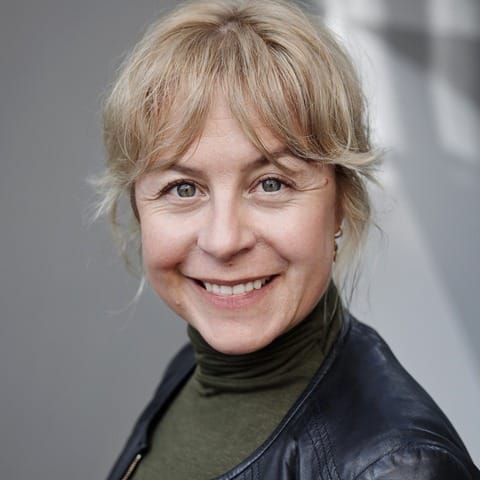
0:02Lea WernliHi and welcome to Time for You. I'm Lea Wernli, and I'm here with my beautiful, amazing, very cool colleague and friend, Shelia Stevens.
0:15Shailia StephensShe's pointing at me. I'm supposed to say something. Hello, everyone. Again, you're very subtle.
0:26Lea WernliYeah. So we are, um, talking about our lives and often, uh, with the glasses of the 3 principles, like, from that Sydney Banks voiced or discovered or talked about in a different way. And it's not new, but, but his language, he's seeing how he he did talk about it was for both of us really, um, transformative and life-changing. Um, what, what I— for me is the, the biggest part to be in life, to really live from there, not as a good idea but as how life works and and as a really practical guidance.
1:27So, um, and what we both saw, or what I think we both saw, is this: it works for all the people the same way. We, we are alive, we have common sense, we have wisdom from moment to moment, we, we feel and think. Like whatever we feel and think from moment to moment, and we are aware, we can be present through that to this common sense, this wisdom through us and our thinking and feeling in the moment. And, and I mean, we could just make a full stop there. That's it.
2:15Shailia StephensMm-hmm.
2:17Lea WernliAnd then there is life, and how life unfolds, and how life unfolds for all the billions of people differently. And there is a dance, and maybe that's part of this human experience, to navigate between, oh, that's how it works for all of us, like the God God's way in somehow. And, oh, but for me, love is really relevant. For someone else, um, being in arts and losing myself in creating things is really relevant. For the third person, um, I don't know, um, nurturing and having family is extremely, um, important.
3:24So what manifests in form is for all of us totally different. And what I think is so interesting is that with the inner knowing and God's way and the design, like where the principle point us, life reveals how in form it wants to come alive through us. And there are also things to see and to learn and to navigate. And The design is extremely helpful to, to make the steps. But in form, there could be different things to us that, that are important.
4:26And so often we lose ourselves in the, yeah, but it's art and everybody should create, or it's— no, love and romance, and be monogamous or polyamorous or, or in between, whatever. That's how— that's gonna be the thing that, that really fulfills you. So this, um, balance is often quite paradoxical in a way. And both is true, that it looks a certain way in the form and the design is true for all of us. And, um, yeah. There is something in that, and maybe you have seen something for yourself, or when you work with people, like, in a way, this paradoxical feeling of that's true, and in form it looks really different for you and me.
5:50Shailia StephensBefore, before I say anything about that, Leah, I want to ask you a question about that, which is Like, what, what got you thinking about that? Like, did something particular come up in your life or in coaching that got you looking in that direction?
6:05Lea WernliI, I just see that, that main themes are not the same for, for people. So there are a variation of themes. They're, they, they cluster somehow. around stuff. You could call them, um, like hero's journey around that topic or that topic or that topic, but it's not the same for the people.
6:41Shailia StephensYeah.
6:42Lea WernliAnd, and, um, That's scary, or could be scary for, for people to, to embark on their journey that doesn't look like the journey of someone else. And sometimes, um, staying in the idea of the principle is really cozy because there it's, it's the same for all of us.
7:13Shailia StephensHmm.
7:15Lea WernliBut really engaging in your life with all this, um, forms and, and needs and wishes and stuff you're drawn to that is exquisite for yourself.
7:31Shailia StephensMm-hmm.
7:32Lea WernliAnd that, that takes courage in a world that wants us to be simple and the same and mainstream and like just one-colored in a way. That always had interested me, like this being human and being more than human. And I just see more and more and more that the journey is really to embrace your humanness, and that differs from the human journey of everybody else.
8:21Shailia StephensYeah, yeah.
8:23Lea WernliAnd the knowing of the principle is to me extremely helpful to see, yeah, there I go. Oh no. There I don't, but ooh, here I go for real. Ooh, that's different than the journey of someone else.
8:43Shailia StephensYeah.
8:44Lea WernliYeah.
8:45Shailia StephensThat's interesting. Like this, it's not even something that I ever even think about. But when you're, when you're talking about it, I can tell you what, what comes up for me. So I, what I hear in that is this question of, I guess, in our, in our modern language in the Western world, we might call it, what is your purpose here? You know, I know that's not what you're saying, because what you're saying, what I hear you saying is more so how, how the universal energy expresses individually through you in this moment, in this moment.
9:27And it can, it can, always be changing. But I hear what— the reason that I hear purpose in that is because I think for the longest time in my adult life, I was hearing about this idea that we could have a unique expression here, that there might be a reason that we're on this planet, that— It would be good to look in the direction of your purpose. I'm gonna just use that word specifically. And the idea that you are unique, you have special interests, special talents, special callings that are drawing you forward.
10:15And I remember for the longest time being in utter resistance to that idea. And I remember when even just a few years back, like I think it was in 2022, I had a series of coaching sessions with Dr. Dicken Bettinger. And Dicken was asking me about what is my purpose? Like, what am I doing here on this planet? And I couldn't really answer the question. I wasn't irritated with Dicken. You can't be irritated with Dicken because he's— He's just too loving and kind that you could ever be irritated with him.
10:53But I just didn't know. And I think for me, what had to happen— and now I feel like, now I'm 50 years old, you know, Leah, like, I feel like for the first year in my entire life, like, I actually know my specific expression here. Like you were talking about before, like, for someone it's nurturing, for someone it's love, for someone it's this or that. I feel the clarity of what lights me up and where I really bring something special to the table in any interaction with the world or other human beings.
11:33Like, I'm starting to feel that, live that, be that for the first time. But what had to happen for that, in my mind— and maybe I'm making this up, I don't know, Leah— but I, for me, I— That didn't come until I got out of my head about everything, in a way. Where I wasn't thinking about making money, I wasn't thinking about being successful, I wasn't anymore thinking about what am I supposed to be doing here, what is my unique expression. For me, The absolute utter settling down of my thoughts on so many levels.
12:21Well, then I was left with, oh, then, oh, okay, now what's here in life? What is here left expressing through me? It was like it could come through then, now more so. And it probably was always coming through before, and maybe I just didn't notice it the way that I do now. But, um, Yeah. So yeah, it's fascinating to me when you say that some people don't want to be— they want to be the same as everybody else, or they want to stay in the comfort zone of— not the all-oneness, that's not the right word, but they want to stay in the comfort zone of just not I don't know what is the word I'm trying to look for, Leah.
13:10Lea WernliTo not embark on this journey somehow, or, I mean, nobody would do that consciously. It's just avoiding uncomfortable feelings.
13:25Shailia StephensYeah, yeah, it's avoiding uncomfortable feelings.
13:29Lea WernliTo be human, a human.
13:32Shailia StephensYeah.
13:32Lea WernliIn in the world, in a way.
13:34Shailia StephensYeah.
13:35Lea WernliAnd, and everything offers us a solution to these uncomfortable feelings. You just have to be like that, or you just have to buy this, or you just have to look like, or you just have to have enough money or success or whatever it is. But it's not that. We feel secure and insecure no matter what.
14:04Shailia StephensYeah.
14:05Lea WernliAnd, and there is something that we do.
14:10Shailia StephensYeah.
14:15Lea WernliNot everyone, um, does the same somehow.
14:23Shailia StephensYeah, yeah. Yeah, true. And yeah, it's, it's, yeah, it's blowing my mind right now that, that you say some people don't want to embark on that journey. Because, you know, I'm thinking to myself, why wouldn't you want to embark on that journey? Like, you know, I think there's, there's another, there's another phrase that I hear, I heard a lot the last couple of years that, and it resonated with me at the time, which was, This idea of being yourself, being yourself.
14:56It sounds so simple. Michael Neal talked a lot about it the last couple of years, like being completely and utterly yourself. And that was so attractive to me because that implied I can let everything else that is not me fall away. That is not me.
15:18Lea Wernlithat means.
15:19Shailia StephensYeah.
15:19Lea WernliWith all of it. And we curate our personality even in this podcast. You don't see and hear all of us, all of me here.
15:35Shailia StephensYeah.
15:35Lea WernliBecause they are like grayer or stranger or weirder or not not mainstream areas of myself.
15:46Shailia StephensYeah.
15:48Lea WernliI'm quite close to live all of it, but I'm not that close to share all of it.
15:57Shailia StephensMm.
15:59Lea WernliAll of us, in most of the cases, because the— I mean, in psychology, you would say the shadowy or the part of us that are wilder or untamed or They're there. And all of us have them.
16:21Shailia StephensMm-hmm.
16:23Lea WernliAnd we are able to be with all of that. The more we are ourselves, the more we see how we work, the more capacity we have to, to deal with that. I want more love, or at the part of me that Whatever.
16:44Shailia StephensMm-hmm.
16:44Lea WernliBut often it's still not, not common to, to live that part, um, in a— in publicly. So just for all of you guys out there, all of us have parts that you don't see. And they don't have to be negative or not good or harmful, not at all. They can live in a, in a quirky, weird, nuanced way in us.
17:21Shailia StephensMm-hmm.
17:23Lea WernliAnd the more we are ourselves, the easier it gets. The more we see how we work, the easier it is to be whoever, whatever mind wants to experience through us. But often it'll look— we just see the, the golden or the polished or the—
17:50Shailia StephensYeah.
17:51Lea WernliHealed or overcome, the, the self that overcame, and not the raw, real all of it.
18:00Shailia StephensMm-hmm.
18:01Lea WernliAnd it is the raw and real, all of it. There are very, very, very few people, and they're kind of not of this world anymore, like a monk or Byron Katie or Eckhart Tolle, or maybe Sid Banks at the end. When you stay on the bench, then you can dissolve in the oneness. But when you decide to be human in the human life, then there is always this wide range at play. And we really often do not talk about all, all of it.
18:48Shailia StephensYeah. Yeah. No, I'm not ready to dissolve into the oneness. Like, neither. That, that never, that never seemed attractive to me. Um, you know, like, I like The edges and the messiness of the human form. Like, I like it. I'm in a good space now, so it's probably easier to say that maybe than some time ago, but I enjoy it. I like that unique expression. I really do. I'm going to share this podcast with a young client that I'm working with because, you know, we have some sessions left, and she wants to look into this idea of who she is.
19:31And, um, what I'm, what I'm getting of this conversation are, are just the 2 pieces of it. Like, one, one is, um, the, is the wholeness, the all-oneness, like that of which we are a part, the life energy. And the other part is that, that is uniquely in the form expressing through you.
19:56Lea WernliMm-hmm.
19:56Shailia StephensAnd I think it'd be really cool, um, for her to get a glimpse of that. 'Cause last week we, we spoke about the wholeness and the all-oneness, and it would be really cool next week to talk with her about that, that juicy human expression that she is and, and seeing that for herself. Because I think she did tell me recently, like, she didn't feel in any way unique, um, at all. And I thought, no, not— there's not one person on this planet who's not really expressing the life energy in the form. It's impossible.
20:30Lea WernliYeah, impossible.
20:31Shailia StephensYeah.
20:32Lea WernliMaybe what's the scary part sometimes, it is there, there are also contradictions and things you think, oh no, I shouldn't feel like that, or I shouldn't want that, or I should be different. But It's there. It's often also in that, hmm, oh, really? Is it that, or is it a bit different to that? But what is it? When it gets a bit uncomfortable and a bit like, as you said, the edges and the, ooh, here, okay.
21:09Shailia StephensMm-hmm.
21:10Lea WernliOh, that feels weird and unknown and new.
21:14Shailia StephensYeah.
21:15Lea WernliHere. Oh, and to be curious enough to, to be willing. And, and I think one of the most beautiful quotes of Sydney Banks is, um, oh, I can't quote it now. It's like in the sense of, um, how beautiful it would be if we would not be afraid of our own experience. And dare to have an experience, to feel it, to know that we are deeply okay with the experience of being human.
21:56Shailia StephensYeah.
21:59Lea WernliThank you.
22:00Shailia StephensThank you, Leah. That was inspiring. That was inspiring. I didn't know where you were going with it at all, but I was just like, wow, where are we going with this? It's so fun. It's so fun to talk because, you know, I I'm like, right now, I am entrenched a lot in 3PN Africa, as you know. And the topics that we talk about there are totally different. You know, it's about trauma of war, forgiveness, finding love in your heart in an unbearably challenging circumstance, being in a refugee camp and all these kinds of things.
22:38One thing that we haven't talked about there, which might be interesting to do, because we do the advanced classes on Mondays in the refugee camp, is like, I wonder what a conversation about unique expression would look like for the refugees. Because on the surface, it looks like there's no opportunity to be anything but in a state of survival. But that can't be true. That can't be true. I'm pretty sure that each person is expressing in a unique way in the situation that they're in, different than anybody else could do in that same community. And that might be a really interesting conversation to have with them, something very life-affirming, you know? Yeah. So thank you for that.
23:27Lea WernliThank you.
23:28Shailia StephensSo cool. Do you want to take us out on the podcast?
23:32Lea WernliYeah. Yeah, so as Shelia said, she will share this episode with a young person. Maybe you, you would like to share it too with someone that you care. And I may share it as well. And I mean, not all of my teenagers like to speak English, but someone said, I understand your English, uh, Frau Wernli, Madame Wernli. And so maybe I will share it and We always hope that you enjoy to spend time with us and have a little time for yourself. And here you see you next time, and thank you so much.
24:14Shailia StephensBye guys, bye-bye.