Automatisch erstellt und nicht Wort für Wort korrigiert. Ein Klick auf eine Zeitmarke springt an die Stelle in der Folge.
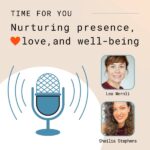
0:03Lea WernliHello and welcome. It's Time for You with Shelia Stevens and hello, Leah Berndley. Hello. Yeah, and we just want you to have a little time for you and to nurture Um, this part in yourself that we are always talking about and just let you know that we love you. And, um, grab a cup of tea or coffee and take some time off just for yourself.
0:48Shelia StevensMm-hmm.
0:50Lea WernliAnd today We kind of want to start off with a very specific 3-principle topic and just kind of a table setting around the conversations we want to have over the next few weeks for you. And we discussed before That sometimes we will just speak about our lives and how the insights, the things we see unfold, and we will tell you stories and maybe cry or laugh or just share. And We don't want you to think that our story is important or that it has to be like in Shelia's life or business or Leah's life or business.
2:01The stories are meant to touch you or spark an insight for you in your life, or just to enjoy the feeling of whatever you hear underneath the story. And sometimes we, we will really go into this metaphor and Pictures.
2:37Shelia StevensMetaphor.
2:37Lea WernliMetaphor. Metapher is German. Yes. And going on a— how do you say that in English? Meta space? Like on a higher—
2:51Shelia StevensGoing up to a higher level, to the meta level.
2:54Lea WernliAnd point from there. And It's kind of the same but a different color. And for me, what I've seen the last couple of months, or even probably years, is that often people feel something in the stories, like a similarity or being touched by something. And that the metaphors often can cut through noise in a way.
3:47Shelia StevensMm-hmm.
3:49Lea WernliTo point us back to what could be true. I mean, it's never the truth because it's Through me or through Shelia or whoever is talking about the principles, but somehow there is less judgment or comparison in our head because it's, um, for everyone kind of the same. And so we will just try to find ways to share what we have seen and what is or was helpful to us, and creating a space for you to open up to the possibility of insights for your own life. And that's what sparks us at the moment to do this podcast series for you. And yeah, enjoy. What have you heard, Shelia? Is there something to translate to?
5:14Shelia StevensNo, no, I was just laughing because in preparation for today, Leah was telling me like 3 ideas she had, and she said, here's 1, here's 2, here's 3, and then she started with number 3 instead of number 1. So it took me a minute to kind of figure out where are we, where are we going.
5:33Lea WernliAnd she's so right, because when I was talking about the 3 ideas, the 3rd one made total sense too. to go first.
5:44Shelia StevensShe just didn't let me know, so I thought we—
5:45Lea WernliNo, I didn't tell Shelia. So yes, we started with the third one, the table setting.
5:52Shelia StevensThe table setting. Yeah. So yeah, I— what I heard is, um, you know, I always have to think of, um, Sid speaking with some of his first students, Sydney Banks, who is the discoverer, the seer of the 3 Principles. As it turns out over time, that became the 3 Principles. It wasn't called that at first. But how he would always encourage everyone to just speak in the most simple of terms, about what they've seen in their own lives. And what also came to me was not only that we love storytelling and that, you know, stories and metaphors are relatable, but there's something about also this having a conversation at eye level, like friends talking to friends.
7:08It's a whole different way of sharing an understanding than maybe you see otherwise out in the world, right? So there's something very personal about it in a way.
7:27Lea WernliMm-hmm.
7:28Shelia StevensUm, and sometimes— so Leah and I have a, um, a German podcast together with Sandra Heim and Sylvia Kittel as well. And sometimes there I feel like, oh my gosh, I'm just talking the whole time about my entire personal life, and I get a little bit uncomfortable and feel vulnerable, but I also then go back to that idea of just sharing simply from our own lives and how it's showing up for us. But what Leah said is really where we're going with it, which is through personal anecdotes, or metaphors that resonate with us personally, we're truly pointing to the impersonal nature of being human, what we all have in common, how we all work, how wisdom can show up for everyone, how thought is the only thing that can create resistance in our life to things just easily flowing, how we can be conscious every day and more and more to the principle, the universal principle of thought, the universal principle of mind, because we are the pure consciousness.
9:03Lea WernliMm-hmm.
9:03Shelia StevensSo that occurred to me, Leah, is just like, Sometimes for me, how personal this sharing feels, but how the goal is actually that we're pointing to the impersonal through that, those personal stories. Yeah.
9:29Lea WernliIt's so interesting what you just pointed out because, um, I'm extremely personal, but I'm also very private. So a big part of my previous life, my secret life, a lot of you guys know us from my secret life, is still unknown.
9:58Shelia StevensMm-hmm.
9:59Lea WernliAnd I won't talk about it because that is kind of an agreement with my family and my husband. And I'm totally fine with that. There is no shame or guilt left that left me on the bench in a way and didn't come back. That's very interesting. That was really the first big thing that the shame about what happened or what I did or what came through me back then left, and still it's not just up to me to share that part, but it doesn't matter. I even very rarely share in, as a coach, in conversations. You know that, Jillia?
10:59Shelia StevensMm-hmm.
11:00Lea WernliI go very deep and very personal, but not private.
11:06Shelia StevensMm-hmm.
11:07Lea WernliAnd it doesn't matter. You can feel that I hear you and I see you and I'm okay with a lot of human stories and emotions and things that we do because we are humans. And it's more the, the place where I'm coming from when I share than what I actually share. And that's so interesting that it doesn't have to be Private, and it, it still touches or transforms or sparks insights in a way.
12:03Shelia StevensYeah, yeah, for sure. So yeah, we'll see, we'll see what those, those stories and metaphors and things look like, like what we'll, what we'll have to say, um, on the way on this journey. Yeah, and sometimes when we'll be speaking, we'll just be pointing directly at what we've seen about who we really are and how we work. Um, And even that is something that words can't capture.
12:52Lea WernliNo.
12:52Shelia StevensYeah, but we'll be doing our best to point. I was having a conversation last week with a client, and we've been working together for almost 6 months, and every time we have a conversation, I find myself saying, I'm only ever saying the same thing again and again and again. You know, we are this aliveness.
13:27Lea WernliHmm.
13:28Shelia StevensThe, the energy that created the world, the universe. We are connected and part of a deeper intelligence. We all think.
13:45Lea WernliHmm.
13:46Shelia StevensWe get lost in giving our, our thoughts attention and, um, importance, believing they are making up our reality. We Can notice that when we're caught up in that. And the minute we do, if we have the grace, we can come back to being in the aliveness. Like, you're either in the feeling of your thought or the feeling of your— of life itself.
14:25Lea WernliMm-hmm.
14:26Shelia StevensAnd we have the awareness to notice the difference between the two spaces. And to me, that's like the essence of the 3 principles. And every single thing that we're speaking about is pointing to that again and again and again. Um, and so sometimes, like, I have a bit of a, a bit of a guilty, a guilty conscience, and I'm like, I'm sorry, you paid me for 6 months of work and I'm just saying the same thing like a broken record over again with from this way and that way and the other way and that way. Um, but that's, that's what we'll be doing here as well.
15:10Lea WernliYes. And oh, that's so cool and funny sometimes, because that's the thing, we never, never, never know who hears what When— and actually, that's kind of the fun thing too. So you just can point and try and, and offer some help.
15:40Shelia StevensYeah.
15:41Lea WernliYeah, we, we are in this beautiful, messed up, strange journey with you guys together, being human Messy, wonderful, human, and more than human. And in this beautiful dance between the two of them.
16:09Shelia StevensYeah, so I think that was topic number 3 on Position number 1.
16:22Lea WernliYes.
16:25Shelia StevensThe topic being, this is how we'll be pointing, this is what we'll be pointing to, and that's it. So we hope that you just were in a good feeling today and kind of have a clearer idea of the direction We're going, and we look forward to more time for you and with you, and we'll see you on the next episode.
16:56Lea WernliBye. Bye.